Fashion
Monday, June 8, 2020
An Interview With The Founder Of Souljourn Yoga
Jordan Ashley, the founder of Souljourn Yoga, first came up with the idea for her company at the age of 25, while feeling frustrated in a yoga class in New York City. She was discouraged by the lack of community within the studio; everyone seemed isolated alone on their mat: “There’s a massive disconnect between people who call themselves practitioners of yoga versus people who are living a yogic lifestyle of kindness, compassion, and service.” Ashley had just returned from living abroad in Southeast Asia, an experience that had her thoroughly convinced that there was more to yoga than just stretching and green juice. Two years (and one TED Talk later), Ashley would be running yoga retreats all over the planet to raise money for girls’ education and empowerment.
Souljourn Yoga is an NGO dedicated to building the cross-cultural connection she felt was so sorely missing that day in Manhattan. We caught up with this fearless entrepreneur to discuss career advice for breaking into the travel industry, as well as tips on maximizing both your yoga practice and your global perspective. The two go hand-in-hand, of course. “Yoga is more than standing on your hands and looking cute—it’s about being a warrior of change and rising to action by your own volition,” says Ashley. So rise up, read on, and prepare to feel inspired. After all you, you may not be able to rack up frequent flier miles while in quarantine, but you certainly can master your downward dog. Namaste.
It definitely was a journey, to say the least, and creating a charity that uses global yoga retreats to support female education and empowerment came from a place of frustration and disappointment from the local yoga community. There’s a massive disconnect between people who call themselves practitioners of yoga versus people who are living a yogic lifestyle of kindness, compassion, and service. And I think it’s so important to differentiate between the two. Yoga is more than standing on your hands and looking cute—it’s about being a warrior of change and rising to action by your own volition.
Saturday, May 23, 2020
Texas’ Ranch Water Breaks Into The Hard Seltzer Market
“Ranch water” might not sound like a refreshing cocktail, but people in West Texas have been enjoying this drink as a way to cool off from the sweltering heat for a long time. The summertime beverage is typically made with tequila, Topo Chico and lime juice—with the option to add ice for a colder sip.
Katie Beal Brown and her family have been drinking ranch water on their Far West Texas ranch for as long as she can remember. The exact origins of the cocktail are unknown, but it’s rumored to be the creation of a rancher in West Texas in the 1960s. The spirit of the drink supposedly had him following the stars all the way from Fort Davis to Marathon. At the end of his journey, he was found asleep under a piñon tree.
Brown started Lone River Beverage Company in 2019 with the goal of offering something different in the hard seltzer category. According to her company, the hard seltzer brands that are currently available leave the consumer with few options beyond a “skinny can with fruity flavors.” Looking to provide a new alternative, the founder and CEO decided to sell ranch water in a can and make it approachable on all fronts: taste, price point and availability.
The product is also a celebration of her own heritage and West Texas, where her family settled generations ago. “When I think of people from West Texas, I think of no frills, get-the-job-done kind of people,” Brown said in a statement. “I think that's also what Lone River Ranch Water represents.”
Lone River is a blend of 100% organic agave nectar, natural key lime juice, a gluten-free alcohol base made from sugar and carbonated seltzer water. How does it compare to White Claw, the frontrunner of the hard seltzer category? In a 12-ounce can, the ranch water contains 85 calories, 3g carbs and 4% alcohol. A 12-ounce can of White Claw has 100 calories, 2g carbs and 5% alcohol, and comes in eight different fruit flavors. The lower-calorie White Claw, which debuted earlier this month with two flavors (pineapple and clementine), contains 70 calories, 0g carbs and 3.7% alcohol per 12-ounce can.
Wednesday, April 22, 2020
Fashion Retail Is Getting Ready To Reopen–And It Will Be ‘Weird’
New York’s Governor Andrew Cuomo hinted that we might possibly be able to open the Tri-State economy by the middle of May, when our lockdown is scheduled to lift.
This is a welcome and interesting turn of events, as it coincides with the anniversary of the last performance of P.T. Barnum’s “Greatest Show on Earth,” which was also held in New York - at the Nassau Coliseum May 21, 2017.
While the closing of the Circus may (or may not) be considered a date to anniversary, there is little doubt that the visual image of what we experienced for years in the world of retail, will no longer be the same. Performers inside and outside the arena will now be wearing masks. This may seem strange to all of us, but the future of retail will largely depend on how well the attendees perform.
All this anticipation brings us to the four basic questions that people are asking:
*When will we reopen?
*What will it look like?
*Will things be the same?
**The question of “what” retail will look like - will also be answered by the states in conjunction with individual retailers who will manage their own safety protocols. Several states have now mandated that face masks will be worn in public (in the absence of social distancing). Smaller retailers may require face masks, gloves and staggered spacing before entry. Some may even provide the face masks and gloves for their customers. In addition, malls and the larger stores may require temperature checks upon entry, which could also be helpful.
**The “will things be the same” question has a short answer – NO! Everything will not be the same (at least in the short term). Safety will sit in front of sales until we receive an all-clear that there is a vaccine or method of treatment for covid-19. There is too much risk in post mitigation to be careless, and we will all will continue to fear resurgence. The future operation of retail will follow the mantra “safe before sale.”
**Technology (likely advanced by Apple or Google) will help with our safety. Several apps will be available to help us. Hard to say whether the technology will use Bluetooth or GPS, but contact tracing will be in play. In China they are using a phone app that lets you know if you are near someone that poses a danger. While this is clearly an invasion of privacy, it just may be a tool that saves your life. There are apps for tracing, for tracking, and there are apps that give you a warning light for risk of exposure to another person. Red color may mean that you need to quarantine for 14 days, Yellow for 7 days, and green would be all clear. It is likely that when more testing is available for all of us, it may even be a requirement that your test and your app are linked.
As we wander through our current crisis, we all know that retail has been struggling for the last few years. The coronavirus pandemic has hastened its evolution.
*In 2017 we had more bankruptcies that we did in 2008.
*In 2018, we lost more than 100 million square feet of retail selling space.
*In 2019 we had more announced store closures in the first 4 months, than we did in all of 2018.
*In 2020 we are projecting more than double the number of store closures than we had in 2019.
On top of all that, if the liquidity crunch gets too great, or the time span takes too long, retail may have more bankruptcies in 2020 than we can possibly imagine. Some of the biggest brand and retail names, will never be seen or heard from again. On a brighter note, some of these great names will survive and be healthier because they have gone through the bankruptcy process.
Rest assured, this is just honest commentary and not meant to be doom and gloom. All this change is just an abrupt advancement of serious issues that have confronted us for years. Ultimately, we will emerge from coronavirus stronger - with a better handle on how to deal with the millennial consumer, and the marriage of e-commerce with brick and mortar. Likely, we will quickly learn the dance of protective shopping coupled with social distancing.
Looking forward, it is entirely possible that:
*All store personnel will wear masks and gloves
*All store personnel will have a temperature check before work
*Entrance to stores will be limited and a security guard will check your temperature as you enter.
*A flat screen TV will appear above the entrance door to measure store density. It may look like the screens that currently appear in parking garages showing how many spaces are available. If the store is too crowded, you will have to wait outside.
While these changes may appear weird, they will help us get back to work and the end-result is safety for everyone.
One can easily imagine what this looks like in the real world we live in. Think about putting on your face mask and heading to an upscale Manhattan store to return an expensive sweater that you bought (on-sale) in February.
You walk to the store and find the salesperson who had graciously helped with the purchase several weeks ago. The return is abruptly rejected (in curt NY style). The salesman says that the sweater was purchased too long ago, the weather was now warm, nobody wants a heavy sweater in the summer, the design is dated, and there was no way he is going to refund the purchase.
You remind him that his store was closed for coronavirus, and no earlier return was possible. He barks back that we need to be more respectful of the store’s situation. The confrontation turns ugly and the discussion becomes heated.
This is a welcome and interesting turn of events, as it coincides with the anniversary of the last performance of P.T. Barnum’s “Greatest Show on Earth,” which was also held in New York - at the Nassau Coliseum May 21, 2017.
While the closing of the Circus may (or may not) be considered a date to anniversary, there is little doubt that the visual image of what we experienced for years in the world of retail, will no longer be the same. Performers inside and outside the arena will now be wearing masks. This may seem strange to all of us, but the future of retail will largely depend on how well the attendees perform.
All this anticipation brings us to the four basic questions that people are asking:
*When will we reopen?
*What will it look like?
*Will things be the same?
**The question of “what” retail will look like - will also be answered by the states in conjunction with individual retailers who will manage their own safety protocols. Several states have now mandated that face masks will be worn in public (in the absence of social distancing). Smaller retailers may require face masks, gloves and staggered spacing before entry. Some may even provide the face masks and gloves for their customers. In addition, malls and the larger stores may require temperature checks upon entry, which could also be helpful.
**The “will things be the same” question has a short answer – NO! Everything will not be the same (at least in the short term). Safety will sit in front of sales until we receive an all-clear that there is a vaccine or method of treatment for covid-19. There is too much risk in post mitigation to be careless, and we will all will continue to fear resurgence. The future operation of retail will follow the mantra “safe before sale.”
**Technology (likely advanced by Apple or Google) will help with our safety. Several apps will be available to help us. Hard to say whether the technology will use Bluetooth or GPS, but contact tracing will be in play. In China they are using a phone app that lets you know if you are near someone that poses a danger. While this is clearly an invasion of privacy, it just may be a tool that saves your life. There are apps for tracing, for tracking, and there are apps that give you a warning light for risk of exposure to another person. Red color may mean that you need to quarantine for 14 days, Yellow for 7 days, and green would be all clear. It is likely that when more testing is available for all of us, it may even be a requirement that your test and your app are linked.
As we wander through our current crisis, we all know that retail has been struggling for the last few years. The coronavirus pandemic has hastened its evolution.
*In 2017 we had more bankruptcies that we did in 2008.
*In 2018, we lost more than 100 million square feet of retail selling space.
*In 2019 we had more announced store closures in the first 4 months, than we did in all of 2018.
*In 2020 we are projecting more than double the number of store closures than we had in 2019.
On top of all that, if the liquidity crunch gets too great, or the time span takes too long, retail may have more bankruptcies in 2020 than we can possibly imagine. Some of the biggest brand and retail names, will never be seen or heard from again. On a brighter note, some of these great names will survive and be healthier because they have gone through the bankruptcy process.
Rest assured, this is just honest commentary and not meant to be doom and gloom. All this change is just an abrupt advancement of serious issues that have confronted us for years. Ultimately, we will emerge from coronavirus stronger - with a better handle on how to deal with the millennial consumer, and the marriage of e-commerce with brick and mortar. Likely, we will quickly learn the dance of protective shopping coupled with social distancing.
Looking forward, it is entirely possible that:
*All store personnel will wear masks and gloves
*All store personnel will have a temperature check before work
*Entrance to stores will be limited and a security guard will check your temperature as you enter.
*A flat screen TV will appear above the entrance door to measure store density. It may look like the screens that currently appear in parking garages showing how many spaces are available. If the store is too crowded, you will have to wait outside.
While these changes may appear weird, they will help us get back to work and the end-result is safety for everyone.
GALLAKJOLER
One can easily imagine what this looks like in the real world we live in. Think about putting on your face mask and heading to an upscale Manhattan store to return an expensive sweater that you bought (on-sale) in February.
You walk to the store and find the salesperson who had graciously helped with the purchase several weeks ago. The return is abruptly rejected (in curt NY style). The salesman says that the sweater was purchased too long ago, the weather was now warm, nobody wants a heavy sweater in the summer, the design is dated, and there was no way he is going to refund the purchase.
You remind him that his store was closed for coronavirus, and no earlier return was possible. He barks back that we need to be more respectful of the store’s situation. The confrontation turns ugly and the discussion becomes heated.
Friday, March 20, 2020
How Fashion In Hollywood Benefits From Diversity
You don't have to be a red carpet maven to know that fashion and Hollywood are deeply interconnected. While movies certainly reflect and popularize the fashions of their time, film can shape the fashion world as well. From urbanite women donning menswear after watching Diane Keaton in Annie Hall to fans of 2018's Black Panther driving interest in Afro-futuristic clothing, fashion has always shaped movies. In other words, what happens in Hollywood will have a ripple effect across the fashion industry, touching both high-end catwalk models and ordinary shoppers.
Unfortunately, the lack of diversity has a domino effect that reaches the fashion industry. Attorney April Reign famously coined the #OscarsSoWhite hashtag in 2015 in reaction to the Academy picking all-white nominees for all major acting Oscars two years in a row. In short, have things gotten better since then? Some gaps are closing; people of color make up about 40% of the U.S. population and landed about 28% of lead acting roles in 2019 blockbusters, which is an improvement in relation to previous years'. However, these heartening statistics shouldn't distract from how far there is to go.
Recently. UCLA's 2020 Hollywood Diversity Report concluded that Hollywood still hasn't demonstrated the “fundamental structural change” required for true equality. Behind-the-camera and executive roles are still overwhelmingly white and male. Directors of 2019 blockbusters were only 15.1% women and 14.4% minorities, while writing credits were 17.4% female and 13.9% people of color. Of the eleven major studios UCLA studied, 91% of C-level executives were white, and 82% were male. These authority figures have an outsized influence on how business gets done in Hollywood, perpetuating a film industry where women and people of color get paid drastically less than their white male co-stars and actors.
flower girl dresses
Sunday, December 29, 2019
A Slow Fashion Brand Celebrating Asian Women
Natasha Sumant was working as a freelance art director in New York when she started exploring South Asian feminism.
"I found that there was a hole in the market and nothing was really speaking to us," Sumant, who is 28, tells Forbes.com.
Gundi is a Hindi expression used for women who aren't considered ladylike—or for female thugs.
"Gundi Studios is a progressive brand that celebrates outspoken South Asian womxn in motherland and diaspora," Sumant explains. "Gundi is the Hindi word for female-thug or gangsta, a colloquialism used to describe girls who misbehave. The brand was founded in response to the lack of representation in media of assertive and independent South Asian women."
Sumant had designed a piece of typography reading "Gundi" and had embroidered it onto a patch, and featured the patch on fashion shoots, which gained traction on social media.
"They really resonated with people, so I started selling the patches to others to pin onto their clothing and claim the word Gundi for themselves too.
"I started buying up vintage jackets and selling those with the patches pre-pinned. When I realized that people preferred buying the jackets over the patches alone, I decided to launch a collection that would enable people to wear their values. I moved back to India in 2018 to design our first collection, and build out our supply chain."
Gundi Studios' products are handmade in India, and clothes are produced in small batches. Sumant's hope is to turn the fast fashion industry on its head, by not just producing clothing, but also running a media outlet on the brand's site, which includes producing short narrative films.
"Our streetwear is created in a women-led supply chain, and our media addresses issues related to gender and postcolonialism. Women are often victims of the fast fashion industry on both the demand and supply side—advertising regularly plays off female insecurities to generate demand for products made by disenfranchised (and often female and South-Asian) garment workers.
"Our clothes are made to last by a small and dedicated team of artisans, embroiderers and tailors based in India."
The studio uses aari, zari and cut dana techniques which are traditionally used on sarees and burkhas, but brings them into the modern day with streetwear-inspired styles.
Sumant said her company's target audience is similar to that of NorblackNorWhite and Brother Vellies, who both merge design with sustainability and traditional techniques. "But we talk to the South Asian market in a way that is very different to others," she adds. "Our campaigns and content speak to a market of underground South Asian diaspora. We make streetwear that takes sustainability, and traditional craft techniques into consideration and our supply chain is womxn led and womxn run."
Sumant's biggest challenge has been creating an ethical supply chain and employing South Asian women at "every level" of the business.
She says there are "real systemic problems" within the garment industry in India and while it's quite easy to find a factory that will make anything for you, it is hard to find ethical spaces.
"In India, on the factory floor womxn often occupy lower positions of hand embroidering, hand sewing or using machines. Pattern cutters are almost always men. Embroiderers that can do our signature zari embroidery work are almost always men, so it was a challenge finding skilled women who could execute our designs."
The types of embroidery the company uses require long stretches of uninterrupted time, which Sumant says explains why it is often the domain of male artists who have fewer responsibilities at home, and therefore more time to invest.
After dedicating most of 2019 to finding ethical partners, Sumant can now say her supply chain is "100% womxn led and womxn run".
The collection and feminist artwork has already hit Mumbai, New York and London, and going forward Sumant hopes to continue growing her audience.
"We'd like to get more of our pieces into consumer's hands so that we can provide the women working at our production partners with as much meaningful work as possible.
"We're also going to keep making work that uses eastern craft techniques and recontextualises South Asian art forms into genres and styles that can be seen across fashion and not just the "ethnic" section of Anthropologie stores and Free People."
Sunday, November 24, 2019
Why Game Streaming Needs 5G
In the initial reviews of Google's Stadia platform, many cite latency as a significant issue for the quality of the experience, especially over a wireless signal. This was the downfall of many previous game streaming services, including one of the first live game streaming services, OnLive. Even the ones currently in existence don't do very well with latency-sensitive games like FPS. You can get away with some of the latency with casual fighting games, sports games and racing games, but the reality is that fundamentally, gaming is much more about latency than it is about bandwidth.
The issue is that latency is introduced in virtually every step of the process—from the wireless input of the user's controller into the ‘console,' all the way to the latency it takes to render a frame on the GPU inside of the Google Datacenter. The networks of today still have too much latency to stream games without noticing the problem. There are techniques to mitigate latency, but nothing Google does seems to be effective. Both 4G cellular and broadband wireline internet services still carry about 50-60ms of latency end to end, and that doesn't even account for the controller's input latency. All of this said, what's to be done?
5G to save the day
To lower the latency, the streaming infrastructure will need to get closer and closer to the edge of the network and closer to the user. A component of this is edge computing, or physically bringing the processing capability closer to the user near the edge of the network. The arrival of standalone 5G networks could provide that lower latency needed for gaming titles like FPS. That's not the kind of 5G networks that we have today, which are non-standalone and heavily leverage 4G infrastructure to power 5G radios to get 5G to consumers faster. Standalone networks already show latencies below 30ms, but I believe we need to go below 10ms to really have a solid experience. Another opportunity to lower latency inside the 5G network may lie in network slicing, in which a specific piece of the network can be provisioned and optimized for game streaming services. This in theory could deliver exactly enough bandwidth and latency for a good user experience.
Another thing that's holding back game streaming is the amount of bandwidth that it takes to stream content at HD and 4K resolutions. Gaming for hours on end could result in consumers blowing through their data caps, which unfortunately exist for both home broadband and cellular connections. This should theoretically be less of a problem with 5G, as data caps get bigger and some operators move towards unlimited. Some operators have even launched their own game streaming services in an attempt to get around the bandwidth issue while simultaneously increasing their ARPU.
Others will enter the market, like Microsoft and its Project xCloud. People's experiences seem to be better with xCloud, but it remains to be seen if it's a worthy substitute for an actual Xbox console. Microsoft's messaging indicates we're not quite there yet.
Saturday, October 26, 2019
In Russia, Putin Inspires New Fashions
Thinking about a fashion makeover this season? In Russia, the style-conscious (and perhaps politically aware) need look no further than a new collection inspired by the President, Vladimir Putin.
The range, entitled "Team Putin," has gone on sale at a boutique on central Moscow's fashionable Bolshaya Dmitrovka street. The site was formerly occupied by a Christian Louboutin store. The designs have been produced by Russian internet retailer Aizel.
Patriotic shoppers might be drawn to the raincoat with the Russian double-headed eagle crest on the back. The crest was for centuries the symbol of the power of Russian tsars. During the communist era of the last century, it disappeared from official buildings and documents, only to enjoy a revival after the end of the Soviet Union.
Wednesday, June 26, 2019
'Guild Wars 2' Dragon Bash Is Now Live With Mount Races And Arena Battles
Last week ArenaNet invited me to check out an early build of Guild Wars 2 that included this week's new Dragon Bash content. It had been a long time since I'd last played Guild Wars 2 since most of my MMO time has shifted to Elder Scrolls Online, but I was happy to sink back into what felt like a comfortable pair of sweat pants or some sort of digital video game comfort food.
It's been years since Tyria last had a Dragon Bash. Now, after the defeat of Mordremoth and Kralkatorrik, as well as the ascension of Aurene, it's time to party again in Hoelbrak, the Norn capital.
The two main features of this year's Dragon Bash that really stood out to me are the Dragon Arena, which is like a parade of intense PvE fights against enormous, hulking holographic beasts, and the mount races that pit players against one another dashing through gates all around the map.
Other activities include busting open dragon pinatas for candies that can be traded in for rewards, betting on moa races (complete with the ability to take the point of view of a mid-race moa,) as well as marveling at all of the festive decorations—such as the massive Kralkatorrik hologram above it all. There's also a Hologram Stampede that happens in other zones surrounding Hoelbrak to keep the action spread out. There are some really nifty rewards planned if you take part in the festivities.
Thursday, May 23, 2019
One of World of Warcraft’s classic characters returns next patch
Battle for Azeroth’s story has been fairly predictable so far. Aside from some weird offshoots like the knife from Legion coming to life, the Horde have battled the Alliance just like Blizzard said they would. And it looks like both factions will put aside their differences to handle Void enemies before the expansion finishes, just like players suspected they would.
In the most recent update to the public test realm, where Blizzard is testing the new Rise of Azshara patch, a familiar character has returned to the cast just in time to save his beloved Horde.
[Warning: this post contains major spoilers for World of Warcraft: Battle for Azeroth patch 8.2, Rise of Azshara]
After a few years of wandering Azeroth, Thrall has returned to aid his people. Thrall was the main protagonist for the Orc campaign in Warcraft 3, and served as the Warchief of the Horde for many years in World of Warcraft. He disappeared shortly after the start of Legion, and players haven’t seen him since.
We’re not entirely sure how Thrall returns to the Horde. After players reach the Nazjatar zone, one of their faction leaders will send them to aid Baine Bloodhoof — a Horde leader that Horde Warchief Sylvanas Windrunner intends to execute. He’s in the dungeons of Orgrimmar, and players will have to fight through areas from the 2013 Siege of Orgrimmar raid.
During the rescue, players will run into a group from the Alliance and Horde. Jaina Proudmoore and Mathias Shaw lead the Alliance, while Saurfang and Thrall make up the Horde rescue team. It seems in his search for allies, Saurfang encountered Thrall and recruited him for the upcoming Horde rebellion. The Horde and Alliance teams bicker, but Thrall encourages the two factions to work together to save their mutual ally.
There are currently several placeholder cutscenes during the rescue attempt, and it’s not entirely clear how it’ll end. The only definitive thing this new mission teaches us is that Thrall is back and has a part to play in the war to come. Depending on what happens to Saurfang in Battle for Azeroth, Thrall could even return to the position of Warchief.
During his original time as Warchief, Thrall helped establish the Horde city of Orgrimmar. Thrall stopped being Warchief to save the planet, and players negatively started referring to him as “Green Jesus.” After Thrall, the position of Warchief went to Garrosh Hellscream. Garrosh was the big-bad for the Mists of Panderia expansion and the final boss in Siege of Orgrimmar.
After Thrall helped players chase Garrosh through time in Warlords of Draenor, Thrall lost his connection to the Elements and gave up his weapon to Shaman players. After that, he disappeared into the wilderness to meditate.
This is the first time Thrall has shown back up in World of Warcraft since 2016. It’s also the first time Blizzard co-founder Chris Metzen has voiced the character since he retired. Metzen did show up during a World of Warcraft panel at BlizzCon 2018 to tease the return of his character.
It’s unclear when Blizzard will release patch 8.2 onto World of Warcraft’s live servers. Players will likely have to wait until the end of May to see Thrall storm the dungeons of Orgrimmar.
Saturday, April 27, 2019
What’s happened so far in World of Warcraft: Battle for Azeroth?
At the end of Legion, the Horde and Alliance united and teamed up to take out Sargeras, the fallen Titan, and the guy who — up until now — has served as the probable end-boss of Warcraft. We got on a spaceship and fought a planet, which was weird. Along the way, we learned that some planets — including Azeroth — have souls, and when those souls are born, they turn into Titans.
We stopped the Burning Legion, the game’s main villains since Warcraft 3, and then locked Sargeras up in space jail. He is imprisoned in the Seat of the Pantheon with all of the other Titans, and Illidan Stormrage stayed behind to act as a jailor. This will probably never come up again and we can consider the matter fully resolved.
Azeroth, the planet, and Azeroth, the Titan, both share a name. Because the Titan is sleeping, she can’t communicate much, and when she does, it’s through Magni Bronzebeard, the Speaker of Azeroth. It also means the Battle for Azeroth is a Battle for ... Azeroth. Makes you think, huh?
However, in his desperation, Sargeras stabbed the planet before we could fully lock him up. That sword is still embedded in Silithus, and it is slowly killing Azeroth. Only by sacrificing our powerful Artifact weapons from Legion were players able to slow the damage. It’s an ongoing issue.
Azeroth is now bleeding Azerite, which is popping up everywhere. It’s a powerful alchemy ingredient that can heal, empower, and, most importantly, be weaponized. The logic and capabilities of Azerite are very vague, but it is essentially able to push warfare to a whole new level.
Wednesday, February 20, 2019
'The Dragon Prince' Creators Talk Magic Systems, The Video Game And What To Expect From Season 2
The Dragon Prince returns for nine more episodes this weekend. Season 2 promises more of everything that made the first season so great, plus lots more dragons.
I spoke with the show's creators, Aaron Ehasz and Justin Richmond, about the show, the video game and their company Wonderstorm, co-founded by Ehasz, Richmond and Justin Santistevan.
Even if you haven't watched The Dragon Prince yet, you're likely familiar with the work of Aaron Ehasz. He was the lead writer and director for the wonderful animated series Avatar: The Last Airbender. It's little wonder some of that show's magic has carried over to The Dragon Prince.
Justin Richmond is a Naughty Dog alumni, and worked on both Uncharted 2: Among Thieves and Uncharted 3: Drake's Deception, but departed the company two years before the release of Uncharted 4. He landed at Riot Games which is where he met Ehasz who was then creative director at the game developer, best known for League of Legends.
Thursday, January 3, 2019
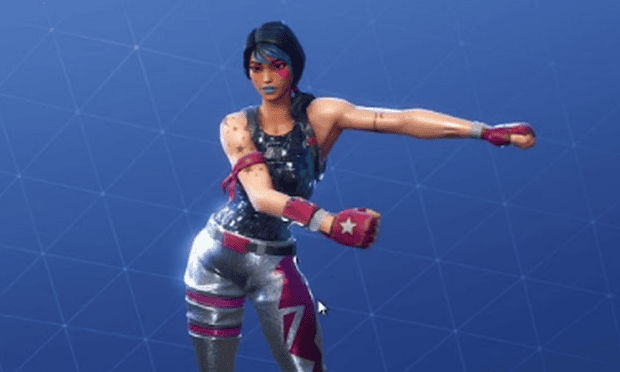
Can you really sue Fortnite for 'stealing' your dance moves?
Imagine it is 2014 and you are the rapper 2 Milly. You have just created a new dance for your music video Milly Rock, and it has proved wildly popular. Four years later, an extremely similar dance crops up in a globally successful video game with more than 200 million players. What do you do? What can you do?
The answer, of course, is sue. And that’s exactly what 2 Milly, real name Terrence Ferguson, has done, alleging copyright infringement, having swiftly registered the Milly Rock dance with the US Copyright Office.
This happened two weeks ago and since then, two more complainants have come forward, accusing Fortnite developer Epic Games of using their moves without permission. Fresh Prince of Bel-Air star Alfonso Ribeiro alleges that Fornite used his Carlton Dance, devised for a memorable episode of the hit US sitcom, without permission or credit. And earlier this week, Russell Horning, AKA the Backpack Kid, launched his own lawsuit claiming Epic breached copyright laws for including his signature dance move "The Floss".
So while the copyright disco fills up and solicitors perform their (wallet) stretching exercises, the big question is: can you realistically copyright a dance move?
"A dance can be protected under copyright law in England under the protection afforded to literary, dramatic or musical works (section 3 (2) of the Copyright, Design and Patents Act)," says Alex Tutty of specialist entertainment law firm Sheridans. "But copyright can subsist in it only when it is recorded in writing or otherwise. It doesn’t just exist because you did the dance; it needs to be written down or filmed."
This is handy for the Fortnite complainants, because there is video evidence of all of them performing their respective moves. However, it’s not quite that easy. "There are all kinds of complexities in practice," says entertainment and tech industry lawyer, Jas Purewal of Purewal & Partners. "For example, who owns the dance – the original creator, the dancers or the choreographer? How can they prove they actually created something new? How can they show that someone else actually infringed their dance and didn’t independently come up with it? The law is pretty archaic, too. It’s just not been an area that has had a lot of attention."
There may also be question marks over the definition of choreography in this instance. In US law, choreography is protected under the 1976 Copyright Act, but this has a range of stipulations. The law differentiates between social dances, which everyone can perform, and choreography performed by experts. This means that no one can pop in and copyright the conga. So if Epic can claim these are social dances, it may tap dance out of court with its billions of dollars of revenue intact.
Monday, December 3, 2018
No-deal Brexit would 'devastate' UK gaming industry, says report
A hard or no-deal Brexit threatens to cause serious harm to Britain's gaming industry, which contributes almost £2bn a year to the economy, a report says.
Because the industry works across borders and competes for highly skilled international talent with other high-growth areas such as AI research, it stands to suffer in the event of a harsh Brexit that leaves the nation disconnected from the European economy, the campaign group Games4EU argues.
"UK interactive entertainment will be harmed by a hard Brexit … and devastated in a no-deal Brexit," said the report's author, Jas Purewal, a digital entertainment lawyer. "This will make it harder to recruit talent into the UK and over the longer term may aid a brain drain of talent out of the UK and into the EU or elsewhere."
He said: "By removing certainty and many of the existing benefits of EU membership, it is feared that Brexit will hinder the UK industry's ambition to be the best in the world."
Livingstone argued that gaming's status as a British success story was under-appreciated, leading the sector to be left out of government thinking on industrial strategy.
"But nobody writes about the industry's success and what is needed to keep it best in class. The video games industry is a flagship for British creativity and a cornerstone of the creative industries. Young multinational, multicultural designers, artists and engineers thrive in British games studios.
"Hiring the best overseas talent does not displace British jobs, it helps protect them. Future growth and performance is dependent on the best talent in order to develop the best products. This in turn attracts the best projects and the most investment from all over the world. What's not to like?"
The Wikipedia founder, Jimmy Wales, who signed the Tech For UK letter, said: "A good tech sector relies on an open and outward-facing business culture. But that's threatened by this Brexit deal, which pulls up the drawbridge and leaves us isolated.
"That's why some of the most exciting firms in the country are against the deal. We demand a final say on Brexit to secure the future of our industry."
In a poll of the industry taken just before article 50 was invoked in March 2017, 40% of UK games companies said they were considering relocating to the EU after Brexit, largely out of a need to address the expected skills shortage that would follow.
Friday, November 9, 2018
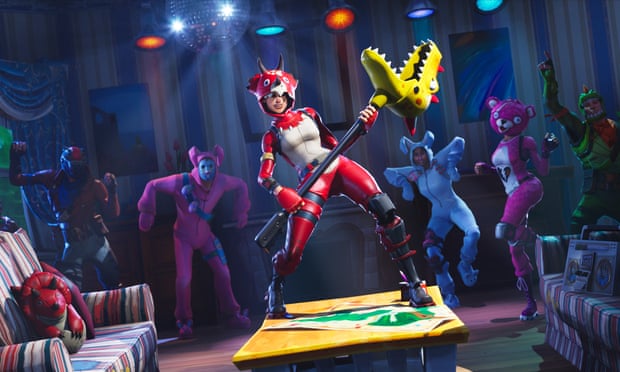
Why can't people stop playing Fortnite?
Almost every video game is designed to make you want to play it. Fortnite, though, is especially good at keeping people coming back, week after week, match after match. This "stickiness", as game designers call it, is not down to some revolutionary new game design factor. Instead, Fornite has improved and repackaged ideas, creating an effective evolutionary step rather than a leap.
While improving shooting skills and chasing a Victory Royale is satisfying, what keeps Fortnite players engaged second-to-second is loot, the items and weapons that can be found all around the map. The random nature of these item-drops, in quality and location, leads to what is known in psychology as a variable-ratio schedule. A weapon or item that could bestow a significant advantage might always be right around the corner. The hope of finding something desirable paired with occasional reward is exciting to humans: you've probably experienced this from shopping sales, or fishing.
Fortnite, however, is unlike most games in that the player's loot is lost at the end of every match. The game's designers don't need to stretch out the content by offering rewards at longer intervals. Instead, Fortnite players get the excitement of receiving a great weapon or item in every single match.
However, when a heuristic fails and the player's character dies, they experience cognitive dissonance between what they thought was going to happen and what actually happened. For a Fortnite player, this may be because they were hit by a sniper in what they thought was a secret hiding spot.
It is imperative to reconcile this disconnect. If you stop playing Fortnite after a failure, you're cutting the feedback cycle at cognitive dissonance, rather than the reward of heuristic strengthening. That makes quitting it hard to do.
These principles apply during every play session. But what keeps people coming back for weeks on end is another powerful human desire: to signal social status. Every Fortnite match has an audience of 100 players to impress. You can play or pay for "skins", visual customisations that apply to either a player's avatar or their weapon, making your character look like a samurai or turning your pickaxe into a balloon sculpture. Socially, skins work much in the same way as a Louis Vuitton handbag does at signalling success, because highly desirable skins require intensive play (and real-world money) to obtain.
Monday, October 22, 2018
Ebb and Flow on the Salish Sea
I used to have a sailboat large enough to sleep a few people comfortably for a week-long vacation, but I sold it a few years ago on the premise that it wasn’t convenient to have a 30-foot boat tugging at dock-lines in the November storms of coastal British Columbia, Canada, while we were off gallivanting in Eastern Europe. That is partially true, but, I have to admit that when I looked out my window on a Saturday morning and saw the waves of the Salish Sea start to crest with white foam, I’d start to sweat. Uh Oh – Arthur is going to want to go sailing…
Our Canadian home sits at the gateway to Desolation Sound. Captain Vancouver must have been having a really bad day when he named this paradise of warm waters, remote islands, and cozy, sheltered coves, because, it is the nemesis of desolate. Every summer, boats flock here from California, Seattle, and Vancouver just to hang out for a few weeks of swimming, paddling, and anchorage-hopping. It’s just silly to live here, and not own something that floats. So, we compromised, sold the sailboat, and bought a little 18-foot (5.5 metre) powerboat dubbed "Rubato", which is a musical term that translates to something like "steal a little time". She is big enough to take us adventuring for a long weekend, and she tucks away nicely into the garage when we leave the continent.
But, as you can imagine, the safety of Desolation Sound is a little too easy for our Dutch mariner, and so, to keep everyone challenged, we make an annual journey 100 km's north to the Discovery Islands group. Here, tides with a spread of 16 feet push the sea back and forth between narrow channels creating currents that can run to 27 km per hour with treacherous rapids, waterfalls, and whirlpools that suck open unexpectedly and disappear just as quickly. Not exactly my cup of tea. Why do I step out of my comfort zone for this? Friends, that’s why. Lovely friends who have been journeying to this area for over 40 years, and since we met them, each summer they invite us up to their cabin to share freshly caught crab over great conversation. Now, even in my books, that’s worth a few rapids. Enter the Tide and Current Tables of my Captain Mac lessons.
Thursday, September 27, 2018
How Forza Horizon 4 raced to the heart of Britain
It's the little moments that get you. The golden autumn sun glinting from the windows of Cotswold cottages. Sheep running across the road in the Scottish Highlands. Skeletal oak trees lining starkly frozen meadows. It is very strange to play a modern big-budget video game and to be taken back to childhood memories, to places that feel somehow imprinted on the psyche. In this way, Forza Horizon 4, the latest open-world driving sim from Leamington Spa-based developer Playground Games, may be the most emotional racing game I've ever played.
Since the arrival of the first title in the series six years ago, each Horizon has featured a densely detailed, near photo-realistic reproduction of real-world geography. The first was in Colorado, the second was southern France and northern Italy, the third, Australia. The setup is always the same: players take part in a festival where they drive dozens of beautiful cars through a vast backdrop, getting involved in a range of races and challenges, but mostly just drinking in the exotic locales. This time, however, the team brought the game home. Forza Horizon 4 is set in an idealised Britain that, while not precisely based on real places (apart from a scaled version of Edinburgh), takes the geography, architecture, flora and fauna of each location and replicates them in gorgeous detail.
It's like a digital road trip, right down to our familiar road signs, and our pothole-scarred byways. But selecting Britain as a location wasn't an easy option for Playground. "My starting position was no, that's not something we should do," says creative director Ralph Fulton. "We all have these unconscious biases about where we live. You forget what's beyond your front door, you get blinded by the mundanity, by the things that annoy you. It's easy to develop a negative perception."
Monday, August 13, 2018
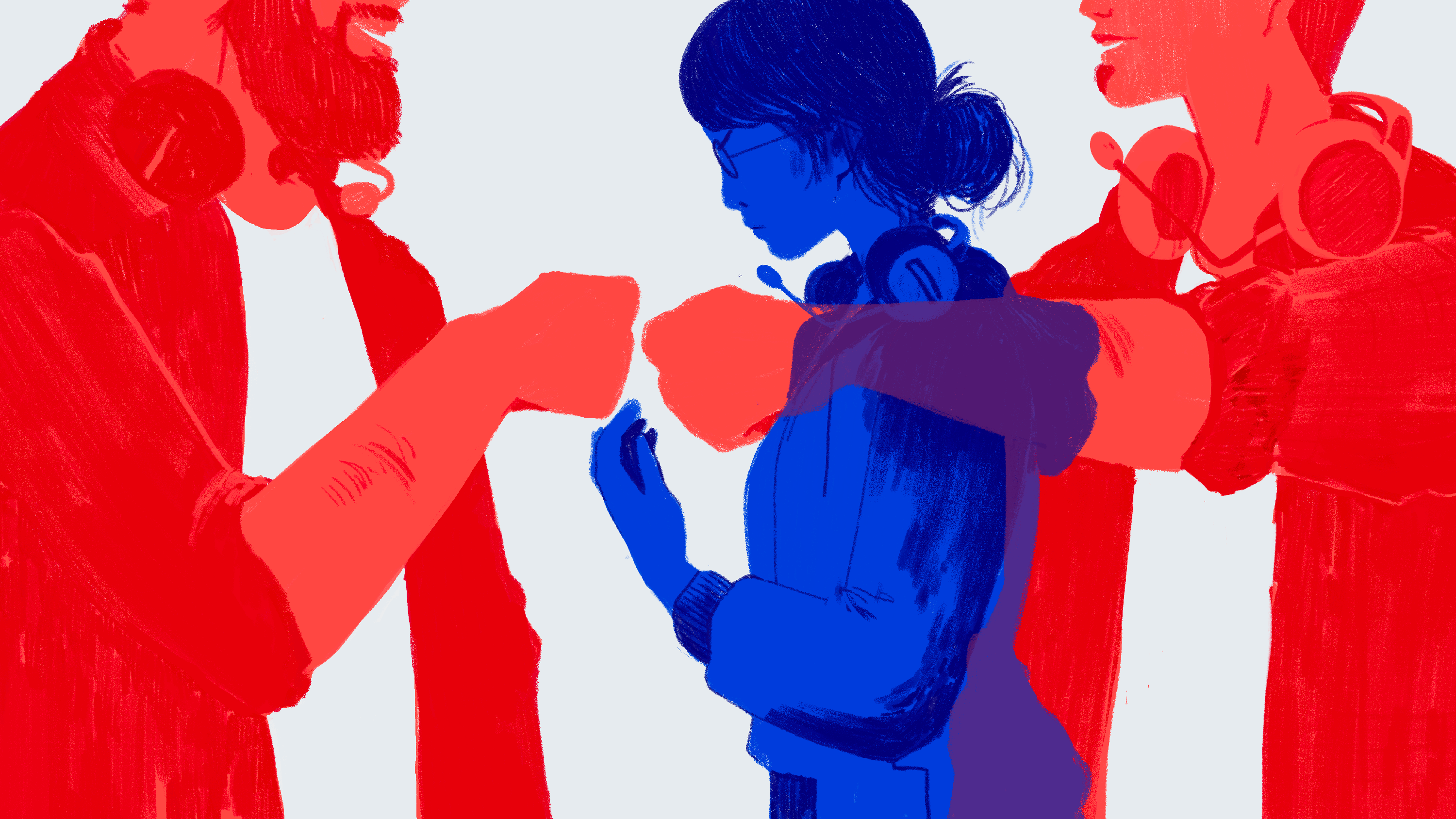
Inside The Culture Of Sexism At Riot Games
Throughout her three years at Riot Games, the company behind League of Legends, Lacy made it her mission to hire a woman into a leadership role. Lacy had heard plenty of excuses for why her female job candidates weren't Riot material.
Some were "ladder climbers". Others had "too much ego". Most weren't "gamer enough". A few were "too punchy", or didn't "challenge convention", a motto you can find in Riot's company manifesto and recruiting materials.
"Across the board, you'd have side-by-side similar backgrounds," said Lacy, which is not her real name, "but the leadership team would constantly ixnay any female candidate for leadership."
Hiring a woman into a leadership position proved impossible for Lacy, she said, and she left the company in part because of the sexism she'd personally experienced. She said her direct manager would ask her if it was hard working at Riot being so cute. Sometimes, she said, he'd imply that her position was a direct result of her appearance.
Every few months, she said, a male boss of hers would comment in public meetings about how her kids and husband must really miss her while she was at work.
One day, Lacy conducted an experiment: After an idea she really believed in fell flat during a meeting, she asked a male colleague to present the same idea to the same group of people days later.
He was sceptical, but she insisted that he give it a shot. "Lo and behold, the week after that, [he] went in, presented exactly as I did and the whole room was like, ‘Oh my gosh, this is amazing.' [His] face turned beet red and he had tears in his eyes," said Lacy. "They just didn't respect women."
Riot Games, founded in 2006, has become one of the biggest companies in gaming on the back of its sole release, League of Legends, which had 100 million monthly players in 2016. With 2500 employees across 20 offices, Riot is a powerhouse.
In 2013, Riot was named one of Business Insider's 25 best tech companies to work for. Two years later, it made $US1.6 billion ($2.2 billion) in revenue. Its Los Angeles campus is cushy in the way you'd expect a money-bloated tech company's offices to be. It's got a gym, a coffee shop, a cafeteria with free food, a LAN cafe. Employees often stay late to grind out competitive skill points in League of Legends with their Riot family and are communicating on Slack well into the night.
Wednesday, July 18, 2018
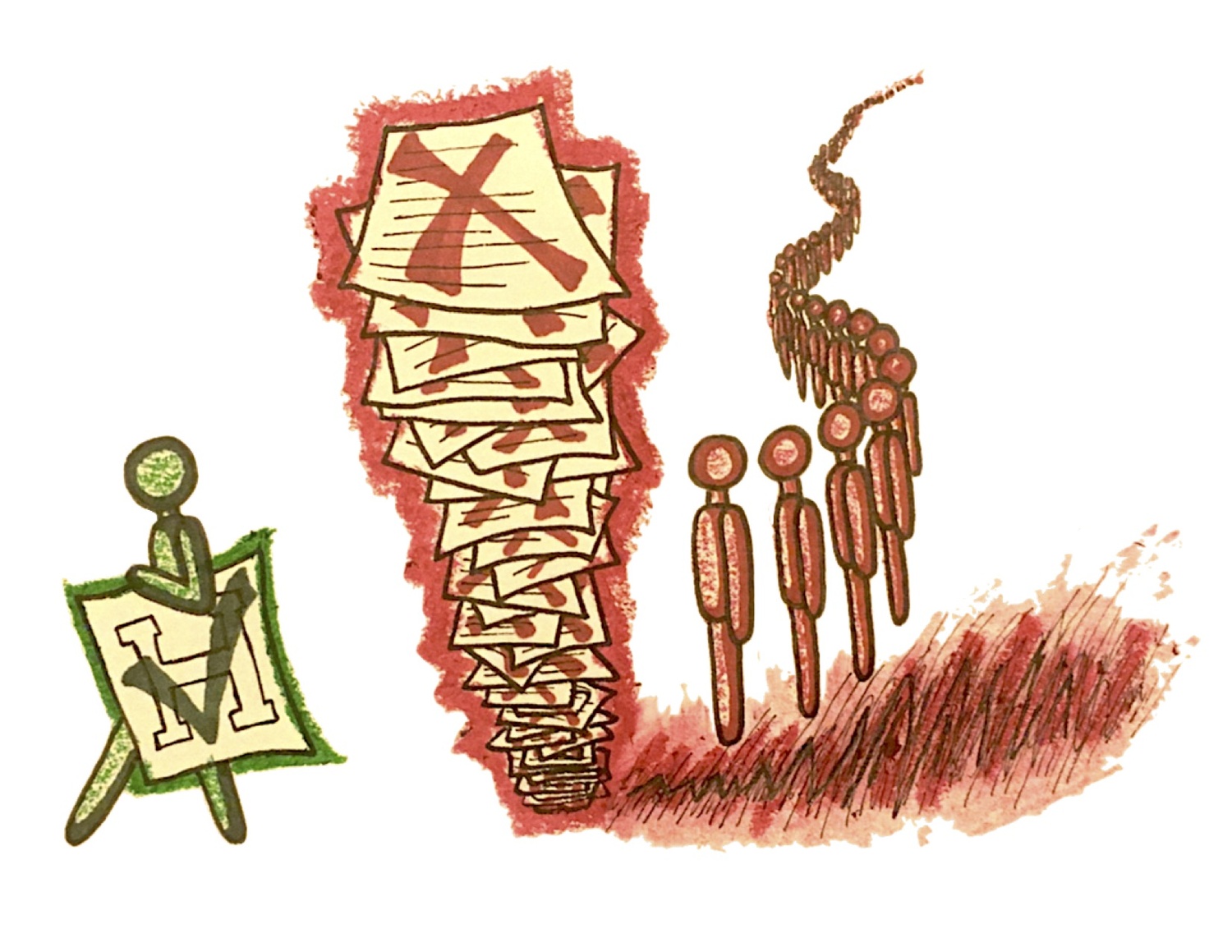
It’s Not Asians Who ‘Game the System’
Asians may be called the "model minority," but it doesn't seem like we're actually wanted in schools. We are implicitly accused of taking up too many spots in elite New York City high schools, so the mayor's new plan proposes to scrap the admissions exam in favor of less objective criteria. At the same time, we are fighting elite universities like Harvard in court over charges of unfair discrimination.
Negative Asian stereotypes do not garner us much sympathy though. We have unappealing personalities. We are only good at tests, and we are only good at those because we spend all our time studying. Perhaps, then, we don't really deserve our spots in the upper echelons of American education.
The misconception that Asians are somehow "gaming the system" is insulting and inaccurate. It's true that many Asians resort to extensive test prep to do as well as they do on admissions exams like the Specialized High School Admissions Test in New York City and the SAT for colleges. But it's dishonest to lump in poor Asian families who sacrifice to pay for test prep with rich people (of any race) who easily afford it. Forgoing vacations, refraining from buying amenities, and even scrimping on food to pay for test prep are not gaming the system.
They are sacrifices. Maybe these sacrifices are crazy or counterproductive; there are certainly arguments to be made against them. Regardless, these are valid choices that are open to people of any race and that have proven to be, on the whole, effective. The people who make these choices may be playing the game the hardest and taking most seriously the prize—which is more than just a seat in a great school and may be no less than the American Dream itself. But they are not gaming the system.
Of course, there are groups who really aren't playing by the rules: the disproportionately white legacy students who sneak their way onto the Harvard "Z-list," a deferred admissions pool for a small number of students each year; and the rich kids whose parents donate $2.5 million to the school before they apply, like Jared Kushner. It's obvious that people with power and money can game the system.
Monday, June 25, 2018
New World of Warcraft Classic Details Revealed
World of Warcraft Classic is coming; we may not know exactly when, but we are getting a better idea of some of the challenges and achievements of the developers trying to make it happen. In a "Dev Watercooler" blog post, Blizzard revealed more details about the prototyping of the game, and reassured excited fans that the re-creation would do the vanilla version of the game justice.
"The process of restoring the classic game is not straightforward, and it's important to us to take the time and effort to get it right--this includes poring over numerous game versions, data, and code; meticulously scrutinizing all the changes we've made over the years," Blizzard's dev team wrote.
"All the work we're doing will ultimately allow us to recreate an authentic classic experience on a platform that is much more optimized and stable, helping us avoid latency and stability issues. Additional improvements will include modern anti-cheat/botting detection, customer service and Battle.net integration, and similar conveniences that do not affect the core gameplay experience."
Blizzard shares that the initial WoW Classic prototype essentially rebuilt Patch 1.12: Drums of War from various archives and source code. This revealed some substantial problems: game crashes, issues with modern video cards, incompatibility with Blizzard's current login system, and more. The developers said they've built a second prototype, using the game's modern code with all its structural enhancements, which will allow them to build a 1.12 version of the game that is stable on modern machines and compatible with Blizzard's current infrastructure. You can read more about the developments in the full blog post.
Blizzard first announced World of Warcraft Classic at Blizzcon 2017, where it revealed the trailer above. GameSpot interviewed production director John Hight about the ambitious project, where he shared more details about how the game will work. "[Making World of Warcraft Classic] has been an ongoing internal debate. I'm sure that this has happened off and on throughout the years, right? But last year this reached a fever pitch, and we really had a lot of internal discussions because we want to make sure that we provide a great experience for our players," he said.
"I think our concern was gonna be our ability to execute Blizzard quality going back so many years. You don't want to ruin the experience. It has to be an authentic experience. But by the same token, people don't want some of the funky bugs that we had back then," he added.
Wednesday, March 21, 2018
How To Get Into World Of Warcraft In 2018
It’s been nearly 14 years since Blizzard launched the world’s most popular massively multiplayer online role-playing game. You’ve had plenty of time to get your affairs in order before finally taking the plunge into Azeroth. Don’t worry, the World of Warcraft hasn’t passed you by. You just might need a little help getting started. We got you.
Why Play Now?
Before we get into the tips, let’s answer the important question: Should you play World of Warcraft in 2018? Of course you should. This article would be a huge waste of everyone’s time otherwise. Why? For one, it’s a game with over 13 years of content to explore. It’s a hero’s journey that takes players from the starting zones of Azeroth to epic battles on far-off planets. They grow from fledgling adventurers performing odd jobs for random NPCs into legendary heroes of the realm performing odd jobs for random NPCs. It’s a world rich with lore, flush with quests and filled with interesting people, both real and artificial.
But Why World Of Warcraft?
It’s got character. It’s got charm. Counting the Warcraft series of real-time strategy games, it’s got an ongoing narrative backed by more than two decades of lore. Though Final Fantasy XIV puts on a great show, World of Warcraft is the most story-rich MMORPG going.
And it’s easy. For some that might not be a selling point, but if you’re looking for a stress-free MMO that doesn’t require a lot of its players (at least not at lower levels), then World of Warcraft is perfect.
Buying The Game
Don’t buy the game. At least not yet. World of Warcraft offers a free trial that allows new players to experience the game up to level 20 (of 110). There are limitations to a trial account—you can’t chat in most public channels, form adventuring parties (you can still join them) or earn more than 10 gold. But it’s still enough to get a feel for the game, the races, the professions and general atmosphere. If you don’t like playing the demo, you can stop. You tried. Maybe World of Warcraft is not for you.
Subscribe to:
Posts (Atom)