Battle for Azeroth’s story has been fairly predictable so far. Aside from some weird offshoots like the knife from Legion coming to life, the Horde have battled the Alliance just like Blizzard said they would. And it looks like both factions will put aside their differences to handle Void enemies before the expansion finishes, just like players suspected they would.
In the most recent update to the public test realm, where Blizzard is testing the new Rise of Azshara patch, a familiar character has returned to the cast just in time to save his beloved Horde.
[Warning: this post contains major spoilers for World of Warcraft: Battle for Azeroth patch 8.2, Rise of Azshara]
After a few years of wandering Azeroth, Thrall has returned to aid his people. Thrall was the main protagonist for the Orc campaign in Warcraft 3, and served as the Warchief of the Horde for many years in World of Warcraft. He disappeared shortly after the start of Legion, and players haven’t seen him since.
We’re not entirely sure how Thrall returns to the Horde. After players reach the Nazjatar zone, one of their faction leaders will send them to aid Baine Bloodhoof — a Horde leader that Horde Warchief Sylvanas Windrunner intends to execute. He’s in the dungeons of Orgrimmar, and players will have to fight through areas from the 2013 Siege of Orgrimmar raid.
During the rescue, players will run into a group from the Alliance and Horde. Jaina Proudmoore and Mathias Shaw lead the Alliance, while Saurfang and Thrall make up the Horde rescue team. It seems in his search for allies, Saurfang encountered Thrall and recruited him for the upcoming Horde rebellion. The Horde and Alliance teams bicker, but Thrall encourages the two factions to work together to save their mutual ally.
There are currently several placeholder cutscenes during the rescue attempt, and it’s not entirely clear how it’ll end. The only definitive thing this new mission teaches us is that Thrall is back and has a part to play in the war to come. Depending on what happens to Saurfang in Battle for Azeroth, Thrall could even return to the position of Warchief.
During his original time as Warchief, Thrall helped establish the Horde city of Orgrimmar. Thrall stopped being Warchief to save the planet, and players negatively started referring to him as “Green Jesus.” After Thrall, the position of Warchief went to Garrosh Hellscream. Garrosh was the big-bad for the Mists of Panderia expansion and the final boss in Siege of Orgrimmar.
After Thrall helped players chase Garrosh through time in Warlords of Draenor, Thrall lost his connection to the Elements and gave up his weapon to Shaman players. After that, he disappeared into the wilderness to meditate.
This is the first time Thrall has shown back up in World of Warcraft since 2016. It’s also the first time Blizzard co-founder Chris Metzen has voiced the character since he retired. Metzen did show up during a World of Warcraft panel at BlizzCon 2018 to tease the return of his character.
It’s unclear when Blizzard will release patch 8.2 onto World of Warcraft’s live servers. Players will likely have to wait until the end of May to see Thrall storm the dungeons of Orgrimmar.
Thursday, May 23, 2019

Saturday, April 27, 2019
What’s happened so far in World of Warcraft: Battle for Azeroth?
At the end of Legion, the Horde and Alliance united and teamed up to take out Sargeras, the fallen Titan, and the guy who — up until now — has served as the probable end-boss of Warcraft. We got on a spaceship and fought a planet, which was weird. Along the way, we learned that some planets — including Azeroth — have souls, and when those souls are born, they turn into Titans.
We stopped the Burning Legion, the game’s main villains since Warcraft 3, and then locked Sargeras up in space jail. He is imprisoned in the Seat of the Pantheon with all of the other Titans, and Illidan Stormrage stayed behind to act as a jailor. This will probably never come up again and we can consider the matter fully resolved.
Azeroth, the planet, and Azeroth, the Titan, both share a name. Because the Titan is sleeping, she can’t communicate much, and when she does, it’s through Magni Bronzebeard, the Speaker of Azeroth. It also means the Battle for Azeroth is a Battle for ... Azeroth. Makes you think, huh?
However, in his desperation, Sargeras stabbed the planet before we could fully lock him up. That sword is still embedded in Silithus, and it is slowly killing Azeroth. Only by sacrificing our powerful Artifact weapons from Legion were players able to slow the damage. It’s an ongoing issue.
Azeroth is now bleeding Azerite, which is popping up everywhere. It’s a powerful alchemy ingredient that can heal, empower, and, most importantly, be weaponized. The logic and capabilities of Azerite are very vague, but it is essentially able to push warfare to a whole new level.
Wednesday, February 20, 2019
'The Dragon Prince' Creators Talk Magic Systems, The Video Game And What To Expect From Season 2
The Dragon Prince returns for nine more episodes this weekend. Season 2 promises more of everything that made the first season so great, plus lots more dragons.
I spoke with the show's creators, Aaron Ehasz and Justin Richmond, about the show, the video game and their company Wonderstorm, co-founded by Ehasz, Richmond and Justin Santistevan.
Even if you haven't watched The Dragon Prince yet, you're likely familiar with the work of Aaron Ehasz. He was the lead writer and director for the wonderful animated series Avatar: The Last Airbender. It's little wonder some of that show's magic has carried over to The Dragon Prince.
Justin Richmond is a Naughty Dog alumni, and worked on both Uncharted 2: Among Thieves and Uncharted 3: Drake's Deception, but departed the company two years before the release of Uncharted 4. He landed at Riot Games which is where he met Ehasz who was then creative director at the game developer, best known for League of Legends.
Thursday, January 3, 2019
Can you really sue Fortnite for 'stealing' your dance moves?
Imagine it is 2014 and you are the rapper 2 Milly. You have just created a new dance for your music video Milly Rock, and it has proved wildly popular. Four years later, an extremely similar dance crops up in a globally successful video game with more than 200 million players. What do you do? What can you do?
The answer, of course, is sue. And that’s exactly what 2 Milly, real name Terrence Ferguson, has done, alleging copyright infringement, having swiftly registered the Milly Rock dance with the US Copyright Office.
This happened two weeks ago and since then, two more complainants have come forward, accusing Fortnite developer Epic Games of using their moves without permission. Fresh Prince of Bel-Air star Alfonso Ribeiro alleges that Fornite used his Carlton Dance, devised for a memorable episode of the hit US sitcom, without permission or credit. And earlier this week, Russell Horning, AKA the Backpack Kid, launched his own lawsuit claiming Epic breached copyright laws for including his signature dance move "The Floss".
So while the copyright disco fills up and solicitors perform their (wallet) stretching exercises, the big question is: can you realistically copyright a dance move?
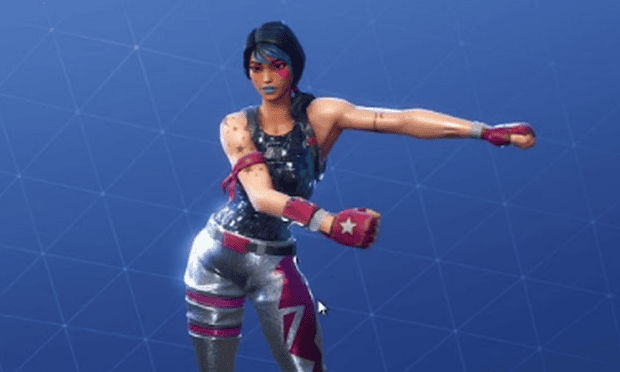
"A dance can be protected under copyright law in England under the protection afforded to literary, dramatic or musical works (section 3 (2) of the Copyright, Design and Patents Act)," says Alex Tutty of specialist entertainment law firm Sheridans. "But copyright can subsist in it only when it is recorded in writing or otherwise. It doesn’t just exist because you did the dance; it needs to be written down or filmed."
This is handy for the Fortnite complainants, because there is video evidence of all of them performing their respective moves. However, it’s not quite that easy. "There are all kinds of complexities in practice," says entertainment and tech industry lawyer, Jas Purewal of Purewal & Partners. "For example, who owns the dance – the original creator, the dancers or the choreographer? How can they prove they actually created something new? How can they show that someone else actually infringed their dance and didn’t independently come up with it? The law is pretty archaic, too. It’s just not been an area that has had a lot of attention."
There may also be question marks over the definition of choreography in this instance. In US law, choreography is protected under the 1976 Copyright Act, but this has a range of stipulations. The law differentiates between social dances, which everyone can perform, and choreography performed by experts. This means that no one can pop in and copyright the conga. So if Epic can claim these are social dances, it may tap dance out of court with its billions of dollars of revenue intact.
Monday, December 3, 2018
No-deal Brexit would 'devastate' UK gaming industry, says report
A hard or no-deal Brexit threatens to cause serious harm to Britain's gaming industry, which contributes almost £2bn a year to the economy, a report says.
Because the industry works across borders and competes for highly skilled international talent with other high-growth areas such as AI research, it stands to suffer in the event of a harsh Brexit that leaves the nation disconnected from the European economy, the campaign group Games4EU argues.
"UK interactive entertainment will be harmed by a hard Brexit … and devastated in a no-deal Brexit," said the report's author, Jas Purewal, a digital entertainment lawyer. "This will make it harder to recruit talent into the UK and over the longer term may aid a brain drain of talent out of the UK and into the EU or elsewhere."
He said: "By removing certainty and many of the existing benefits of EU membership, it is feared that Brexit will hinder the UK industry's ambition to be the best in the world."
Livingstone argued that gaming's status as a British success story was under-appreciated, leading the sector to be left out of government thinking on industrial strategy.

"But nobody writes about the industry's success and what is needed to keep it best in class. The video games industry is a flagship for British creativity and a cornerstone of the creative industries. Young multinational, multicultural designers, artists and engineers thrive in British games studios.
"Hiring the best overseas talent does not displace British jobs, it helps protect them. Future growth and performance is dependent on the best talent in order to develop the best products. This in turn attracts the best projects and the most investment from all over the world. What's not to like?"
The Wikipedia founder, Jimmy Wales, who signed the Tech For UK letter, said: "A good tech sector relies on an open and outward-facing business culture. But that's threatened by this Brexit deal, which pulls up the drawbridge and leaves us isolated.
"That's why some of the most exciting firms in the country are against the deal. We demand a final say on Brexit to secure the future of our industry."
In a poll of the industry taken just before article 50 was invoked in March 2017, 40% of UK games companies said they were considering relocating to the EU after Brexit, largely out of a need to address the expected skills shortage that would follow.
Because the industry works across borders and competes for highly skilled international talent with other high-growth areas such as AI research, it stands to suffer in the event of a harsh Brexit that leaves the nation disconnected from the European economy, the campaign group Games4EU argues.
"UK interactive entertainment will be harmed by a hard Brexit … and devastated in a no-deal Brexit," said the report's author, Jas Purewal, a digital entertainment lawyer. "This will make it harder to recruit talent into the UK and over the longer term may aid a brain drain of talent out of the UK and into the EU or elsewhere."
He said: "By removing certainty and many of the existing benefits of EU membership, it is feared that Brexit will hinder the UK industry's ambition to be the best in the world."
Livingstone argued that gaming's status as a British success story was under-appreciated, leading the sector to be left out of government thinking on industrial strategy.
"But nobody writes about the industry's success and what is needed to keep it best in class. The video games industry is a flagship for British creativity and a cornerstone of the creative industries. Young multinational, multicultural designers, artists and engineers thrive in British games studios.
"Hiring the best overseas talent does not displace British jobs, it helps protect them. Future growth and performance is dependent on the best talent in order to develop the best products. This in turn attracts the best projects and the most investment from all over the world. What's not to like?"
The Wikipedia founder, Jimmy Wales, who signed the Tech For UK letter, said: "A good tech sector relies on an open and outward-facing business culture. But that's threatened by this Brexit deal, which pulls up the drawbridge and leaves us isolated.
"That's why some of the most exciting firms in the country are against the deal. We demand a final say on Brexit to secure the future of our industry."
In a poll of the industry taken just before article 50 was invoked in March 2017, 40% of UK games companies said they were considering relocating to the EU after Brexit, largely out of a need to address the expected skills shortage that would follow.
Subscribe to:
Posts (Atom)