Almost every video game is designed to make you want to play it. Fortnite, though, is especially good at keeping people coming back, week after week, match after match. This "stickiness", as game designers call it, is not down to some revolutionary new game design factor. Instead, Fornite has improved and repackaged ideas, creating an effective evolutionary step rather than a leap.
While improving shooting skills and chasing a Victory Royale is satisfying, what keeps Fortnite players engaged second-to-second is loot, the items and weapons that can be found all around the map. The random nature of these item-drops, in quality and location, leads to what is known in psychology as a variable-ratio schedule. A weapon or item that could bestow a significant advantage might always be right around the corner. The hope of finding something desirable paired with occasional reward is exciting to humans: you've probably experienced this from shopping sales, or fishing.
Fortnite, however, is unlike most games in that the player's loot is lost at the end of every match. The game's designers don't need to stretch out the content by offering rewards at longer intervals. Instead, Fortnite players get the excitement of receiving a great weapon or item in every single match.
However, when a heuristic fails and the player's character dies, they experience cognitive dissonance between what they thought was going to happen and what actually happened. For a Fortnite player, this may be because they were hit by a sniper in what they thought was a secret hiding spot.
It is imperative to reconcile this disconnect. If you stop playing Fortnite after a failure, you're cutting the feedback cycle at cognitive dissonance, rather than the reward of heuristic strengthening. That makes quitting it hard to do.
These principles apply during every play session. But what keeps people coming back for weeks on end is another powerful human desire: to signal social status. Every Fortnite match has an audience of 100 players to impress. You can play or pay for "skins", visual customisations that apply to either a player's avatar or their weapon, making your character look like a samurai or turning your pickaxe into a balloon sculpture. Socially, skins work much in the same way as a Louis Vuitton handbag does at signalling success, because highly desirable skins require intensive play (and real-world money) to obtain.

Fashion
Friday, November 9, 2018
Monday, October 22, 2018
Ebb and Flow on the Salish Sea
I used to have a sailboat large enough to sleep a few people comfortably for a week-long vacation, but I sold it a few years ago on the premise that it wasn’t convenient to have a 30-foot boat tugging at dock-lines in the November storms of coastal British Columbia, Canada, while we were off gallivanting in Eastern Europe. That is partially true, but, I have to admit that when I looked out my window on a Saturday morning and saw the waves of the Salish Sea start to crest with white foam, I’d start to sweat. Uh Oh – Arthur is going to want to go sailing…
Our Canadian home sits at the gateway to Desolation Sound. Captain Vancouver must have been having a really bad day when he named this paradise of warm waters, remote islands, and cozy, sheltered coves, because, it is the nemesis of desolate. Every summer, boats flock here from California, Seattle, and Vancouver just to hang out for a few weeks of swimming, paddling, and anchorage-hopping. It’s just silly to live here, and not own something that floats. So, we compromised, sold the sailboat, and bought a little 18-foot (5.5 metre) powerboat dubbed "Rubato", which is a musical term that translates to something like "steal a little time". She is big enough to take us adventuring for a long weekend, and she tucks away nicely into the garage when we leave the continent.
But, as you can imagine, the safety of Desolation Sound is a little too easy for our Dutch mariner, and so, to keep everyone challenged, we make an annual journey 100 km's north to the Discovery Islands group. Here, tides with a spread of 16 feet push the sea back and forth between narrow channels creating currents that can run to 27 km per hour with treacherous rapids, waterfalls, and whirlpools that suck open unexpectedly and disappear just as quickly. Not exactly my cup of tea. Why do I step out of my comfort zone for this? Friends, that’s why. Lovely friends who have been journeying to this area for over 40 years, and since we met them, each summer they invite us up to their cabin to share freshly caught crab over great conversation. Now, even in my books, that’s worth a few rapids. Enter the Tide and Current Tables of my Captain Mac lessons.
Our Canadian home sits at the gateway to Desolation Sound. Captain Vancouver must have been having a really bad day when he named this paradise of warm waters, remote islands, and cozy, sheltered coves, because, it is the nemesis of desolate. Every summer, boats flock here from California, Seattle, and Vancouver just to hang out for a few weeks of swimming, paddling, and anchorage-hopping. It’s just silly to live here, and not own something that floats. So, we compromised, sold the sailboat, and bought a little 18-foot (5.5 metre) powerboat dubbed "Rubato", which is a musical term that translates to something like "steal a little time". She is big enough to take us adventuring for a long weekend, and she tucks away nicely into the garage when we leave the continent.
But, as you can imagine, the safety of Desolation Sound is a little too easy for our Dutch mariner, and so, to keep everyone challenged, we make an annual journey 100 km's north to the Discovery Islands group. Here, tides with a spread of 16 feet push the sea back and forth between narrow channels creating currents that can run to 27 km per hour with treacherous rapids, waterfalls, and whirlpools that suck open unexpectedly and disappear just as quickly. Not exactly my cup of tea. Why do I step out of my comfort zone for this? Friends, that’s why. Lovely friends who have been journeying to this area for over 40 years, and since we met them, each summer they invite us up to their cabin to share freshly caught crab over great conversation. Now, even in my books, that’s worth a few rapids. Enter the Tide and Current Tables of my Captain Mac lessons.
Thursday, September 27, 2018
How Forza Horizon 4 raced to the heart of Britain
It's the little moments that get you. The golden autumn sun glinting from the windows of Cotswold cottages. Sheep running across the road in the Scottish Highlands. Skeletal oak trees lining starkly frozen meadows. It is very strange to play a modern big-budget video game and to be taken back to childhood memories, to places that feel somehow imprinted on the psyche. In this way, Forza Horizon 4, the latest open-world driving sim from Leamington Spa-based developer Playground Games, may be the most emotional racing game I've ever played.
Since the arrival of the first title in the series six years ago, each Horizon has featured a densely detailed, near photo-realistic reproduction of real-world geography. The first was in Colorado, the second was southern France and northern Italy, the third, Australia. The setup is always the same: players take part in a festival where they drive dozens of beautiful cars through a vast backdrop, getting involved in a range of races and challenges, but mostly just drinking in the exotic locales. This time, however, the team brought the game home. Forza Horizon 4 is set in an idealised Britain that, while not precisely based on real places (apart from a scaled version of Edinburgh), takes the geography, architecture, flora and fauna of each location and replicates them in gorgeous detail.
It's like a digital road trip, right down to our familiar road signs, and our pothole-scarred byways. But selecting Britain as a location wasn't an easy option for Playground. "My starting position was no, that's not something we should do," says creative director Ralph Fulton. "We all have these unconscious biases about where we live. You forget what's beyond your front door, you get blinded by the mundanity, by the things that annoy you. It's easy to develop a negative perception."
Since the arrival of the first title in the series six years ago, each Horizon has featured a densely detailed, near photo-realistic reproduction of real-world geography. The first was in Colorado, the second was southern France and northern Italy, the third, Australia. The setup is always the same: players take part in a festival where they drive dozens of beautiful cars through a vast backdrop, getting involved in a range of races and challenges, but mostly just drinking in the exotic locales. This time, however, the team brought the game home. Forza Horizon 4 is set in an idealised Britain that, while not precisely based on real places (apart from a scaled version of Edinburgh), takes the geography, architecture, flora and fauna of each location and replicates them in gorgeous detail.
It's like a digital road trip, right down to our familiar road signs, and our pothole-scarred byways. But selecting Britain as a location wasn't an easy option for Playground. "My starting position was no, that's not something we should do," says creative director Ralph Fulton. "We all have these unconscious biases about where we live. You forget what's beyond your front door, you get blinded by the mundanity, by the things that annoy you. It's easy to develop a negative perception."
Monday, August 13, 2018
Inside The Culture Of Sexism At Riot Games
Throughout her three years at Riot Games, the company behind League of Legends, Lacy made it her mission to hire a woman into a leadership role. Lacy had heard plenty of excuses for why her female job candidates weren't Riot material.
Some were "ladder climbers". Others had "too much ego". Most weren't "gamer enough". A few were "too punchy", or didn't "challenge convention", a motto you can find in Riot's company manifesto and recruiting materials.
"Across the board, you'd have side-by-side similar backgrounds," said Lacy, which is not her real name, "but the leadership team would constantly ixnay any female candidate for leadership."
Hiring a woman into a leadership position proved impossible for Lacy, she said, and she left the company in part because of the sexism she'd personally experienced. She said her direct manager would ask her if it was hard working at Riot being so cute. Sometimes, she said, he'd imply that her position was a direct result of her appearance.
Every few months, she said, a male boss of hers would comment in public meetings about how her kids and husband must really miss her while she was at work.
One day, Lacy conducted an experiment: After an idea she really believed in fell flat during a meeting, she asked a male colleague to present the same idea to the same group of people days later.
He was sceptical, but she insisted that he give it a shot. "Lo and behold, the week after that, [he] went in, presented exactly as I did and the whole room was like, ‘Oh my gosh, this is amazing.' [His] face turned beet red and he had tears in his eyes," said Lacy. "They just didn't respect women."
Riot Games, founded in 2006, has become one of the biggest companies in gaming on the back of its sole release, League of Legends, which had 100 million monthly players in 2016. With 2500 employees across 20 offices, Riot is a powerhouse.
In 2013, Riot was named one of Business Insider's 25 best tech companies to work for. Two years later, it made $US1.6 billion ($2.2 billion) in revenue. Its Los Angeles campus is cushy in the way you'd expect a money-bloated tech company's offices to be. It's got a gym, a coffee shop, a cafeteria with free food, a LAN cafe. Employees often stay late to grind out competitive skill points in League of Legends with their Riot family and are communicating on Slack well into the night.
Some were "ladder climbers". Others had "too much ego". Most weren't "gamer enough". A few were "too punchy", or didn't "challenge convention", a motto you can find in Riot's company manifesto and recruiting materials.
"Across the board, you'd have side-by-side similar backgrounds," said Lacy, which is not her real name, "but the leadership team would constantly ixnay any female candidate for leadership."
Hiring a woman into a leadership position proved impossible for Lacy, she said, and she left the company in part because of the sexism she'd personally experienced. She said her direct manager would ask her if it was hard working at Riot being so cute. Sometimes, she said, he'd imply that her position was a direct result of her appearance.
Every few months, she said, a male boss of hers would comment in public meetings about how her kids and husband must really miss her while she was at work.
One day, Lacy conducted an experiment: After an idea she really believed in fell flat during a meeting, she asked a male colleague to present the same idea to the same group of people days later.
He was sceptical, but she insisted that he give it a shot. "Lo and behold, the week after that, [he] went in, presented exactly as I did and the whole room was like, ‘Oh my gosh, this is amazing.' [His] face turned beet red and he had tears in his eyes," said Lacy. "They just didn't respect women."
Riot Games, founded in 2006, has become one of the biggest companies in gaming on the back of its sole release, League of Legends, which had 100 million monthly players in 2016. With 2500 employees across 20 offices, Riot is a powerhouse.
In 2013, Riot was named one of Business Insider's 25 best tech companies to work for. Two years later, it made $US1.6 billion ($2.2 billion) in revenue. Its Los Angeles campus is cushy in the way you'd expect a money-bloated tech company's offices to be. It's got a gym, a coffee shop, a cafeteria with free food, a LAN cafe. Employees often stay late to grind out competitive skill points in League of Legends with their Riot family and are communicating on Slack well into the night.
Wednesday, July 18, 2018
It’s Not Asians Who ‘Game the System’
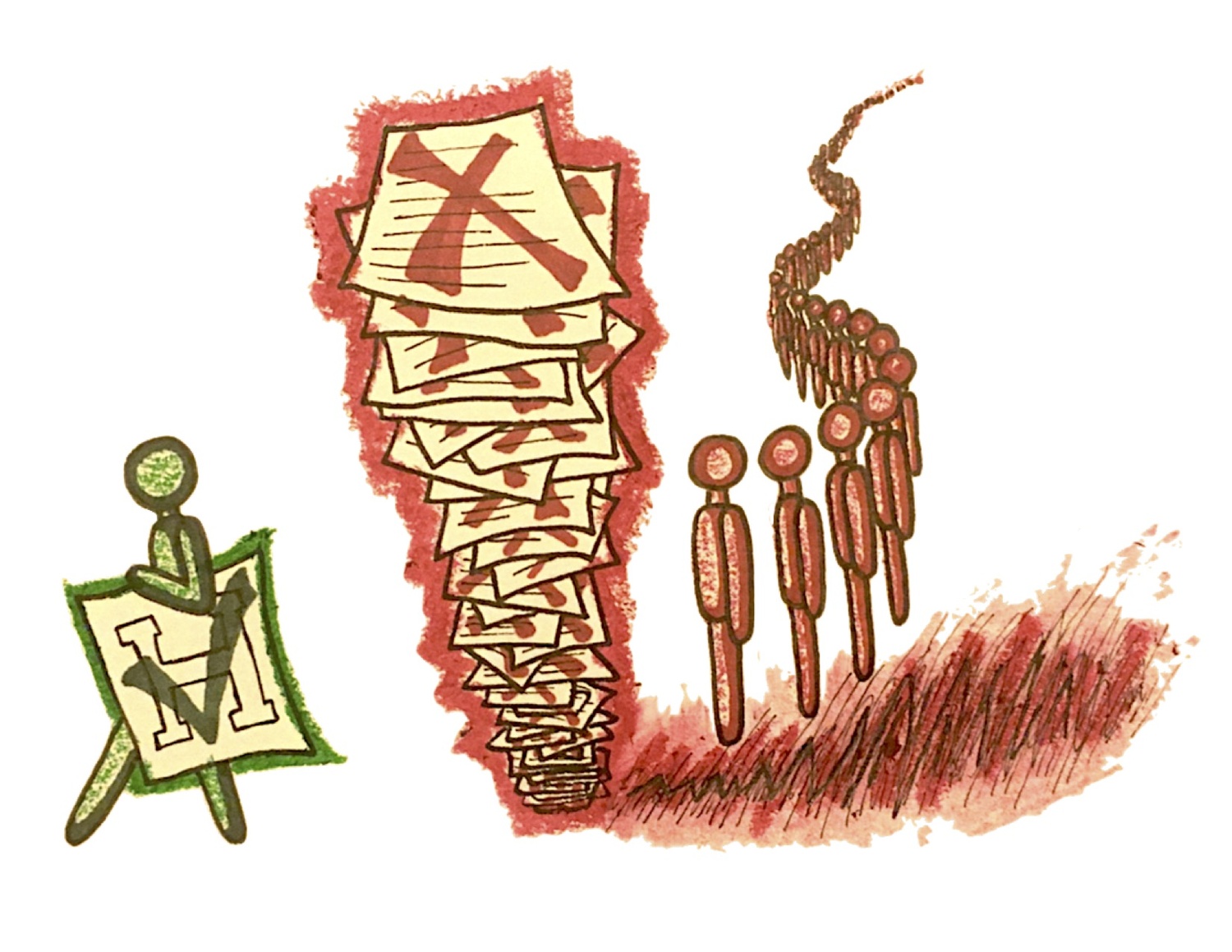
Asians may be called the "model minority," but it doesn't seem like we're actually wanted in schools. We are implicitly accused of taking up too many spots in elite New York City high schools, so the mayor's new plan proposes to scrap the admissions exam in favor of less objective criteria. At the same time, we are fighting elite universities like Harvard in court over charges of unfair discrimination.
Negative Asian stereotypes do not garner us much sympathy though. We have unappealing personalities. We are only good at tests, and we are only good at those because we spend all our time studying. Perhaps, then, we don't really deserve our spots in the upper echelons of American education.
The misconception that Asians are somehow "gaming the system" is insulting and inaccurate. It's true that many Asians resort to extensive test prep to do as well as they do on admissions exams like the Specialized High School Admissions Test in New York City and the SAT for colleges. But it's dishonest to lump in poor Asian families who sacrifice to pay for test prep with rich people (of any race) who easily afford it. Forgoing vacations, refraining from buying amenities, and even scrimping on food to pay for test prep are not gaming the system.
They are sacrifices. Maybe these sacrifices are crazy or counterproductive; there are certainly arguments to be made against them. Regardless, these are valid choices that are open to people of any race and that have proven to be, on the whole, effective. The people who make these choices may be playing the game the hardest and taking most seriously the prize—which is more than just a seat in a great school and may be no less than the American Dream itself. But they are not gaming the system.
Of course, there are groups who really aren't playing by the rules: the disproportionately white legacy students who sneak their way onto the Harvard "Z-list," a deferred admissions pool for a small number of students each year; and the rich kids whose parents donate $2.5 million to the school before they apply, like Jared Kushner. It's obvious that people with power and money can game the system.
Negative Asian stereotypes do not garner us much sympathy though. We have unappealing personalities. We are only good at tests, and we are only good at those because we spend all our time studying. Perhaps, then, we don't really deserve our spots in the upper echelons of American education.
The misconception that Asians are somehow "gaming the system" is insulting and inaccurate. It's true that many Asians resort to extensive test prep to do as well as they do on admissions exams like the Specialized High School Admissions Test in New York City and the SAT for colleges. But it's dishonest to lump in poor Asian families who sacrifice to pay for test prep with rich people (of any race) who easily afford it. Forgoing vacations, refraining from buying amenities, and even scrimping on food to pay for test prep are not gaming the system.
They are sacrifices. Maybe these sacrifices are crazy or counterproductive; there are certainly arguments to be made against them. Regardless, these are valid choices that are open to people of any race and that have proven to be, on the whole, effective. The people who make these choices may be playing the game the hardest and taking most seriously the prize—which is more than just a seat in a great school and may be no less than the American Dream itself. But they are not gaming the system.
Of course, there are groups who really aren't playing by the rules: the disproportionately white legacy students who sneak their way onto the Harvard "Z-list," a deferred admissions pool for a small number of students each year; and the rich kids whose parents donate $2.5 million to the school before they apply, like Jared Kushner. It's obvious that people with power and money can game the system.
Subscribe to:
Comments (Atom)